

PRIORITY RESEARCH PLATFORM / SYNTHETIC BIOLOGY
PURELIX®
Exploring biological routes to defined molecules.
The primary synthetic biology platform of YOHOLIFE® LAB, connecting molecular targets, enzyme systems and biomanufacturing research.
From molecular complexity to research opportunity.
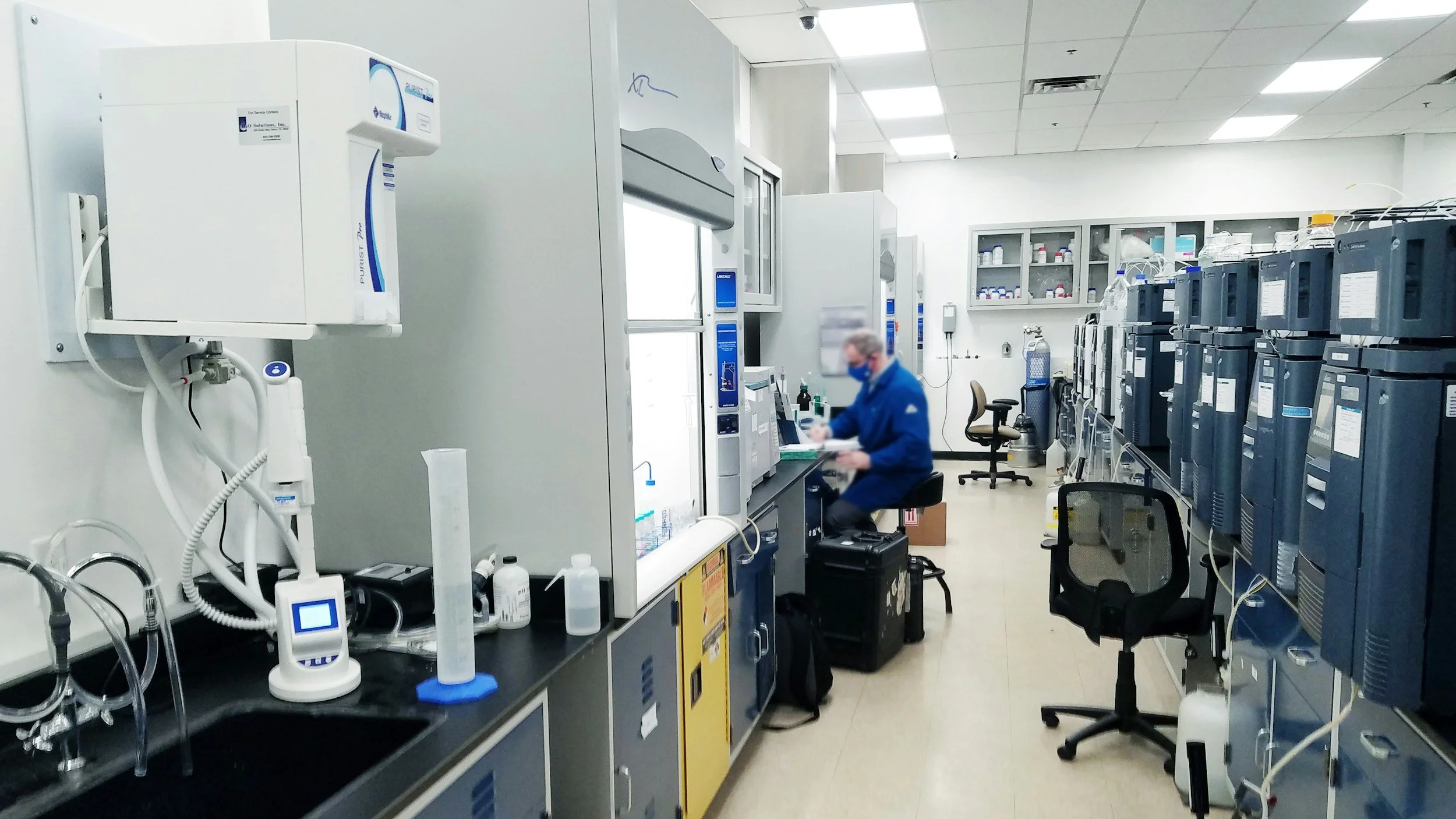
Many valuable natural compounds are structurally complex, present at low concentrations, or difficult to separate from closely related molecules. Their development raises a connected set of questions: how can the right structure be formed, how can its identity be demonstrated, and how could a promising route become a reproducible process?
PURELIX® brings those questions into one research platform. Our current portfolio spans Rhodiola glycosides, polyphenols, alkaloids, procyanidins and ginsenosides. We explore biosynthetic pathways, enzyme-enabled transformations and biological production systems alongside recovery and analytical characterisation—building evidence that can guide future industrial development.

THE RESEARCH FRAMEWORK
From a molecular question
to a tested possibility.
Our framework connects design, biological engineering, experimental learning and process evaluation. Open each area to explore the methods and evidence that can guide a project.
Methods are selected for the molecule, host and research question. The research library introduces the structures and published science that inform our research questions.
01DESIGNMetabolic Pathway DesignExplore the approach
How could biology assemble the intended molecule?
- Pathway mapping
- Connect a defined target structure with precursor reactions, enzyme families and published biological pathways.
- Enzyme and cofactor assessment
- Examine reaction specificity, cofactor needs and the compatibility of candidate enzyme steps.
- Flux and bottleneck analysis
- Use metabolic models and measured intermediate profiles to explore competition for cellular resources.
02BUILDStrain Engineering & Gene EditingExplore the approach
Can the proposed pathway work coherently in a biological host?
- Host and construct design
- Compare biological hosts, gene-expression architectures and pathway modules against the target question.
- Genome editing and expression tuning
- Explore targeted genetic changes and expression balance where they suit the chosen organism and project.
- Identity and stability checks
- Link genetic verification with compound profiles and repeated culture observations to examine consistency.
03TEST & LEARNHigh-Throughput Screening & AI OptimisationExplore the approach
Which next experiment is most likely to resolve a useful uncertainty?
- Parallel screening
- Compare candidate variants or conditions with suitable controls and consistent, measurable readouts.
- Design of experiments
- Study interacting variables and repeatability, rather than interpreting a single promising observation.
- Model-assisted prioritisation
- Where data quality permits, use machine learning or active learning to rank candidates and quantify uncertainty.
04DEVELOPFermentation Scale-Up & PurificationExplore the approach
How does a promising laboratory result behave as the process grows?
- Fermentation characterisation
- Examine culture behaviour, oxygen transfer, mixing and feed strategy in relation to the defined compound.
- Scale translation
- Compare engineering conditions across vessels and examine how biological performance changes with process scale.
- Recovery and purification
- Compare separation approaches using compound identity, impurity profiles and material balances.
05VERIFYAnalytics & Functional ValidationExplore the approach
What is the material, and what can the evidence actually establish?
- Chemical identity and composition
- Use suitable reference standards and complementary chromatography, mass spectrometry or structural methods.
- Method performance
- Examine specificity, precision and accuracy in the intended sample matrix, with appropriate controls.
- Function and evidence context
- Select relevant biological assays or material tests; interpret dose, chemical form and model limitations explicitly.
Design → Build → Test → Learn. Evidence from each area informs the next question—and can bring us back to an earlier decision.
PURELIX® MOLECULAR PIPELINE
A closer view of our research interests.
Our molecular pipeline brings together selected targets for synthetic biology research. Apply for access to explore their identities, structures and defining characteristics, alongside relevant published studies.
We welcome researchers, investors and potential academic or industrial partners who would like to understand our scientific direction or discuss ideas for future collaboration.
Apply for research accessApplications are reviewed by our team.
Already approved?Open the research library
Sign in with the email address in your approved request.
OPEN EXPLORATION
Beyond the current pipeline.
Our target molecules provide a starting point. Explore the wider technical questions below—then bring us another possibility. These directions are ideas for investigation, shaped by evidence and collaboration.
RESEARCH POSSIBILITIESPURELIX®6 research directions · 24 ideas
01Pathway design & precursors
Which pathway arrangement could form the target compound while keeping precursor supply and side reactions understandable?
Route comparison
Which pathway steps and intermediate compounds should be compared for the selected target?
Precursor availability
Where could precursor supply limit compound formation, and how could that limitation be tested?
Bottlenecks & by-products
Which intermediate patterns would reveal a limiting step or an unwanted competing reaction?
Carbon allocation
How could carbon allocation between growth, the target pathway and competing reactions be assessed under comparable culture conditions?
02Enzymes & glycosylation
How could enzyme choice and reaction conditions support the correct chemical transformation rather than a related product?
Enzyme selectivity
Which candidate enzymes favour the intended substrate and transformation under comparable conditions?
Sugar-donor supply
For a glycosylated target, how could donor availability and sugar-linkage specificity affect the product profile?
Activity & compatibility
Which reaction conditions allow pathway enzymes to function together with useful activity and stability?
Enzyme balance
How do relative enzyme amounts affect intermediate accumulation and the balance between intended and related products?
03Host & process development
How could pathway behaviour be connected with a controlled and reproducible biological production process?
Host suitability
Which host characteristics fit the pathway, target compound and intended recovery approach?
Culture conditions
How do pH, temperature and nutrient supply affect growth and the compound profile?
Repeatability & scale
Which observations need to be repeated before a route justifies larger process trials?
Product tolerance
How do the target compound and key intermediates affect host growth and pathway behaviour at different concentrations?
04Recovery & route assessment
Can the desired compound be recovered, identified and evaluated within a workable overall process?
Separation & recovery
Which separation approaches recover the target while limiting losses and unwanted components?
Identity & composition
Which reference standards and complementary measurements distinguish the target from similar compounds?
Whole-process comparison
How would recovery, inputs and process constraints compare with existing sourcing or production routes?
Impurity tracing
Which pathway or recovery steps contribute non-target compounds, and how could their origin be distinguished from analytical interference?
05Cell-free biocatalysis
How could enzyme systems outside living cells support defined transformations while making reaction compatibility and resource requirements measurable?
Enzyme-cascade assembly
Which sequence of enzyme addition or reaction modules could limit incompatible conditions while preserving the intended product profile?
Cofactor recycling
How could cofactor-regeneration choices affect reaction stability, product formation and the amount of fresh cofactor required?
Spatial organisation
How does organising enzymes on a scaffold change intermediate transfer and reaction behaviour compared with freely mixed enzymes?
Reusable biocatalysts
How could immobilisation affect enzyme selectivity, activity and recoverability across repeated reaction cycles?
06Data-guided development
How could structured experiments and models guide the next development decision while making uncertainty and limits of prediction explicit?
Comparable datasets
Which measurements, reference checks and experimental metadata are needed to compare pathway or process candidates reliably?
Experimental design
Which combinations of conditions could separate individual effects from interactions while keeping the comparison reproducible?
Predictive models
Which models could prioritise pathway or process candidates, and how should their predictions be checked against new experiments?
Uncertainty & transferability
How would data gaps or a change of host, target or conditions affect confidence in a model-guided recommendation?
These are possible starting points for exploration. We welcome further ideas, research questions and perspectives from academia and industry.
Share an idea with YOHOLIFE® LAB
Research approach & molecular pipeline.
Explore five connected areas of our research framework, then discover the molecular targets: their structures, characteristics and published studies. Questions and new perspectives are welcome throughout.

Potential value for industry and society
PURELIX® could help researchers and industry evaluate additional ways to produce useful compounds. Its value would come from understanding when a biological route is technically credible and where it can complement existing sources.
Additional sourcing possibilities. A viable biological route could complement cultivation and extraction for a clearly defined compound.
Transferable process knowledge. Pathway, enzyme and cultivation records could help teams understand variability and design more informative development trials.
Better-informed industrial choices. Product identity, recovery and process evidence could reveal which concepts merit further work and which barriers remain before scale-up.
Responsible route comparison. Assessment of yield, inputs, energy and downstream requirements could inform resource choices; any environmental advantage would need to be demonstrated for the full process.
How a molecule becomes a production question.
Development begins with a defined molecular identity and intended material specification. Candidate pathways, enzymes and biological hosts can then be compared against measurable criteria: product selectivity, repeatability, recovery, purity and practical process requirements.
PURELIX® connects these questions rather than treating biological conversion as the final result. A promising route must also withstand analytical scrutiny and process comparison. As evidence develops, the platform can support decisions about further optimisation, scale-up and eventual applications across ingredient research and biomanufacturing.

Explore together
We welcome academic and industrial collaborators with ideas in pathway design, enzyme discovery, fermentation, analytical characterisation or downstream processing. A proposed method, an unresolved bottleneck or a compound-specific question can provide a starting point.